

Paver Patio Ideas for Kansas Homes That Hold Up and Look Good
If you are collecting paver patio ideas for Kansas homes, you are really after two things at once. You want a space that looks beautiful, and you want one that survives our brutal freeze and thaw winters without heaving, settling, or sprouting weeds. The good news is that you do not have to choose between the two. With the right design on top and the right base underneath, a paver patio can be the best looking part of your yard and still sit flat and solid twenty years from now. This guide walks through the paver patio ideas that actually hold up to Kansas weather, and the details that decide whether your patio ages well or falls apart.
Paver patio ideas for Kansas homes that actually last
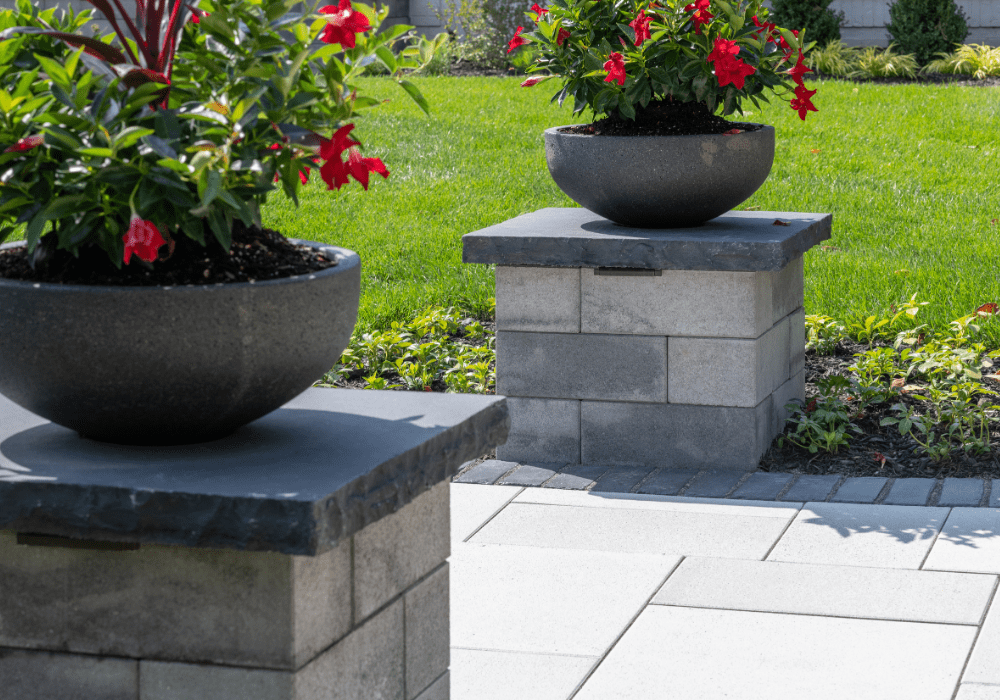
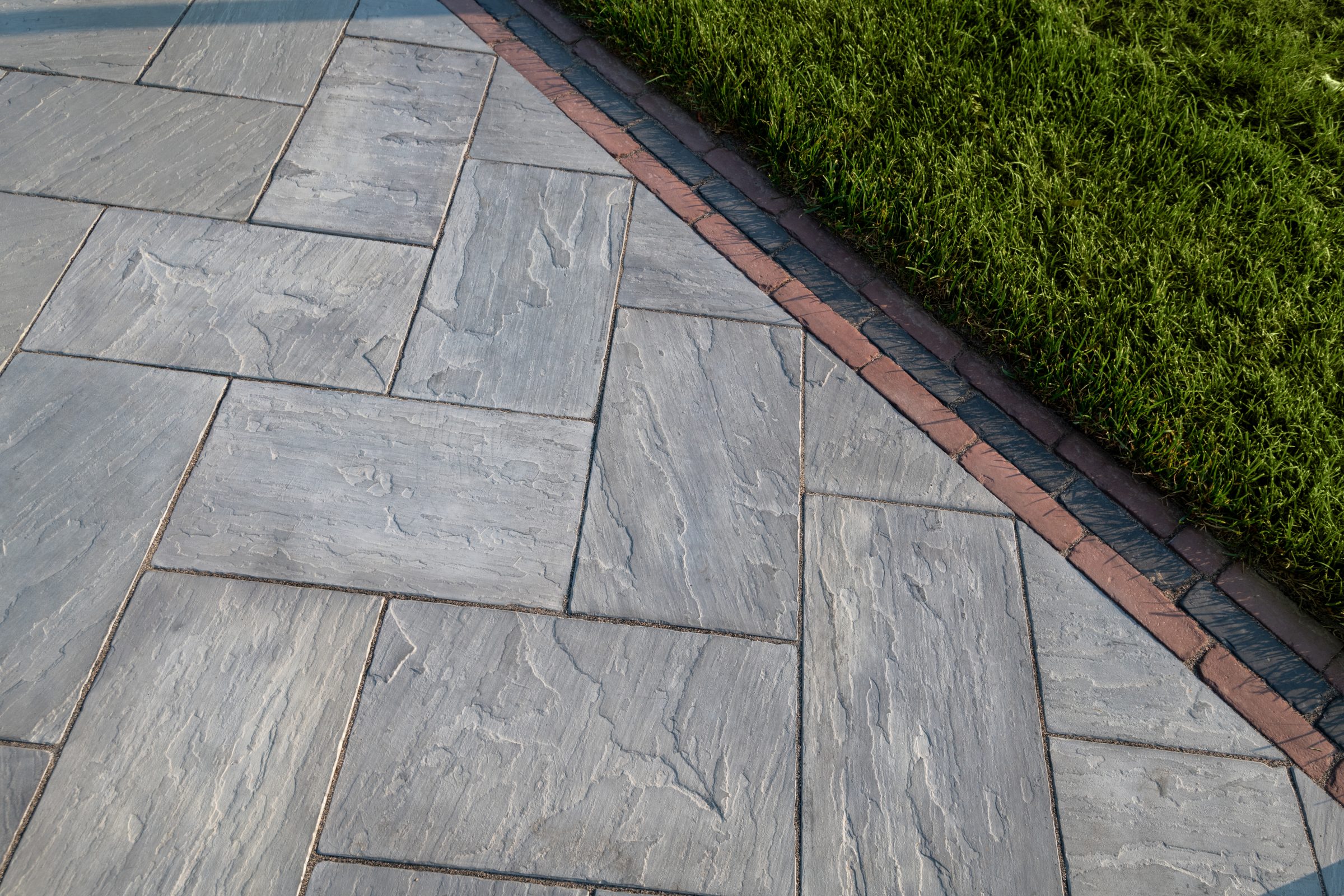
The best designs pair good looks with real durability. Large format pavers read clean and modern, and they give you fewer joints for weeds and water to find. A built in seating wall frames the space, adds seating for a crowd, and can double as a low retaining wall on a sloped lot. Stepping the patio down into the yard turns a flat slab into a true outdoor room with a sense of arrival. A contrasting soldier course border ties the whole design together while hiding the cut edges that make an amateur job look unfinished.
None of these ideas cost a fortune on their own. Together, though, they are the difference between a patio that feels intentional and one that feels like an afterthought bolted onto the back of the house. The trick is planning all of them before the first paver goes down, because retrofitting a seating wall or a border after the fact is expensive and rarely looks as clean.
Design for how Kansas actually uses a backyard
A patio you can only enjoy three months a year is a missed opportunity in our climate. Build in a fire feature and you pull people outside from the first warm evening in spring through the last crisp night of fall. Add a pergola or a shade structure and you make the space usable in July heat instead of abandoning it by noon. Think about wind too, because Kansas has plenty of it, and a low wall or a planting bed on the prevailing side makes a patio far more comfortable than an exposed slab in the open.
The homeowners who get the most out of their patios are the ones who designed around real habits: where the sun sits at dinner, how many people they host, whether the kids need a run of open lawn beside the hardscape. Start from how you live, not from a photo, and the layout almost designs itself.
Materials and color choices that age well
Trends come and go, but a few material choices tend to look right for decades. Warm gray and tan blends hide dust and pollen better than stark white or near black, both of which show every speck in our dusty summers. A subtle texture reads more natural than a high gloss finish and holds its footing when wet. Mixing two complementary Unilock lines, one for the field and one for the border, gives you a custom look without the cost of a fully custom cut pattern.
Whatever you pick, choose a manufactured paver engineered for freeze and thaw rather than a bargain big box unit. The cheap ones fade, spall, and lose their edges within a few Kansas winters, and no amount of clever design saves a patio built from the wrong stone.
Lighting and walkways finish the look
The details are what separate a professional design from a weekend project. Low voltage lighting along steps, walls, and borders makes the space usable and safe after dark, and it costs a fraction of what most homeowners expect. Matching your walkways and garden paths to the patio ties the whole yard together instead of leaving a patchwork of surfaces that never quite agree. Even a single run of path lighting from the back door to the patio changes how often the space actually gets used on a weeknight.
Why the base matters more than the pattern
Here is the part most homeowners never think about. In Kansas the ground freezes and thaws over and over all winter, and that constant movement is what pushes a cheap patio out of level. The only thing that stops it is a properly compacted base built to ICPI standards, with the right depth of open graded or dense graded aggregate and real compaction at every lift. The prettiest paver pattern in the world will still heave and settle if the base beneath it was rushed. When you invest in a patio, most of your money should be going into the part you will never see.
Popular paver patio layouts for Kansas backyards
Beyond individual features, the overall layout shapes how a patio feels and functions. An open entertaining layout keeps the space wide and uninterrupted for a big table and a crowd, which suits homeowners who host often. A multi zone layout breaks the patio into a dining area and a separate lounge or fire area, so the space works for both a quiet evening and a full gathering. A wraparound design hugs the back of the house and connects multiple doors, which makes the yard feel like a true extension of the home.
On sloped Kansas lots, a stepped or terraced layout turns a grade problem into a design feature, using low walls to create level rooms at different heights. The right layout depends on your lot, your doors, and how you move between inside and out. Getting it on paper first, before any digging, is what lets all these ideas fit together instead of competing for the same space.
Common questions about paver patio ideas for Kansas homes
How big should a paver patio be? Bigger than most people first guess. A dining set for six needs room for pulled out chairs and a path around them, and a real gathering spills past the furniture, so we usually encourage homeowners to size up rather than down. It is far cheaper to build the right size once than to extend later.
Which paver ideas add the most value? A durable, well proportioned patio with a fire feature and good lighting consistently returns the most in both daily use and resale. Highly personal or oversized features can narrow appeal, so the safest ideas are the ones grounded in quality and broad appeal rather than a passing trend.
A local note for Wichita yards
Wichita lots bring their own quirks that shape a patio design. Many neighborhoods sit on expansive clay soils that swell when wet and shrink when dry, which puts extra stress on any hardscape and makes proper base prep and drainage even more important than the average brochure suggests. Prevailing south winds in the warm months are strong enough to matter, so a patio with a windbreak on that side, a wall, a planting bed, or a structure, is noticeably more comfortable to use.
Sun exposure is worth mapping too, since a west facing patio bakes in the late afternoon exactly when you want to use it. Small design choices that respond to these local realities, orienting the space, adding shade where the sun lands, and building the base for our soils, are what separate a patio that merely looks good in photos from one that is genuinely pleasant to live on through a Kansas year.
Related reading from Bluestone
- Pavers vs Concrete Patio: What’s Better for Wichita Homes?
- What to Know Before Starting a Patio Installation in Wichita KS
- 7 Backyard Patio Ideas That Fit Wichita Homes
The Bluestone difference and your next step
At Bluestone we build every patio to recognized ICPI and Unilock standards, and we do not allow shortcuts in base prep, drainage, compaction, or edge restraint. We use Unilock pavers engineered specifically for Kansas freeze and thaw cycles so your patio holds its color and its shape for the long haul. You can see how these ideas come together on real Wichita homes on our outdoor living enhancements page. When you are ready, request a consultation and we will walk your yard, talk through the ideas that fit your space and budget, and design a patio that looks incredible and is built to last.
Tags: