

Pavers vs Concrete Patio: What’s Better for Wichita Homes?

When Wichita homeowners start planning a patio, the first real decision is almost always pavers vs concrete patio. Both look fine on the day they are finished, but they age in very different ways in our Kansas climate, and that difference is where most of the long term regret comes from. A slab that looks perfect this summer can be a cracked, stained eyesore in a decade, while a well built paver patio can still look sharp long after. This guide breaks down the honest tradeoffs in cost, lifespan, repairs, and looks so you can choose the surface that fits your yard and your budget instead of guessing.
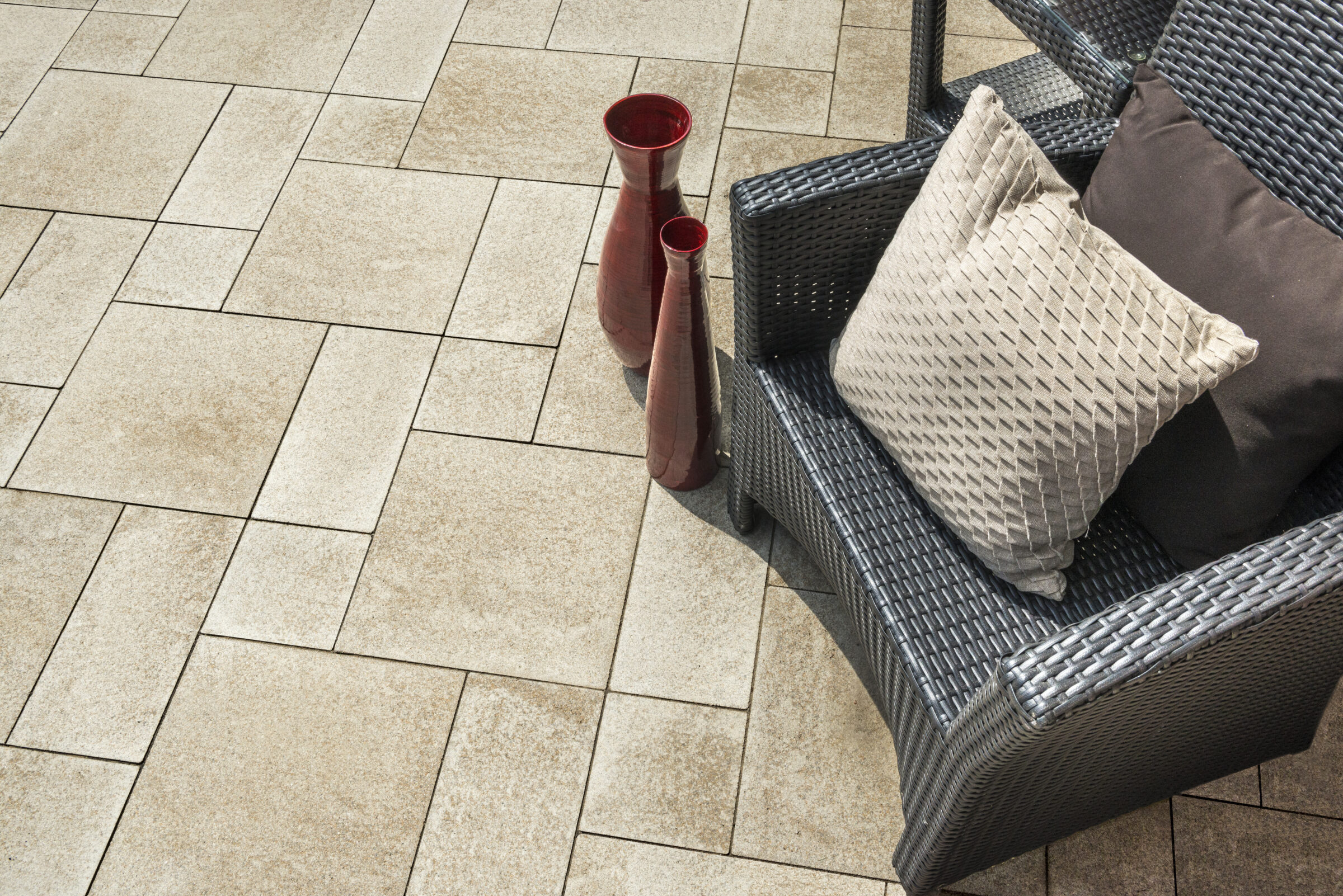
| Factor | Pavers | Poured concrete |
|---|---|---|
| Upfront cost | Higher | Lower |
| Typical lifespan | 30+ years | 15 to 25 years |
| Cracking | Flexes with the ground | Prone to cracks |
| Repairs | Lift and reset single units | Patch or full replace |
| Freeze and thaw | Moves with it | Cracks under it |
| Look and options | Many colors and patterns | Mostly plain gray |
Pavers vs concrete patio: the short answer
Poured concrete costs less up front. Pavers cost more up front but last longer, resist cracking, and are far easier to repair when something does go wrong. Over the full life of the patio, pavers usually win on value, not because they are trendy but because they are built to move with our climate instead of fighting it. The right choice for you comes down to how long you plan to stay in the home, how much the long term look matters to you, and whether you would rather pay once or pay again in fifteen years.
That is the summary. The reasons behind it are worth understanding, because they explain why two patios that cost about the same today can be worth wildly different amounts a decade from now.
Cost and lifespan compared
The upfront gap is real, but so is the difference in how long each surface lasts. Here is the honest comparison most contractors will not put in writing:
- Concrete. Lower upfront price, but it tends to crack over time, and a cracked slab is nearly impossible to fix cleanly. Typical usable life is fifteen to twenty five years before it looks tired and patched.
- Pavers. Higher upfront price, but a properly installed paver patio can last thirty years or more, and damaged units can be lifted and swapped one at a time without a scar.
- Long term value. Because pavers rarely need a full tear out, the real cost per year of service is often lower even though the sticker price is higher on day one.
How each handles Kansas freeze and thaw
This is where our climate quietly decides the winner. A poured slab is one big rigid piece, so when the ground freezes and heaves, the concrete has nowhere to go and it cracks. A paver patio is made of many small units sitting on a flexible compacted base, so it moves with the ground instead of resisting it and then settles back. That flexibility is the single biggest reason pavers outlast concrete in Kansas, and it is why we recommend them for almost every project we take on.
Freeze and thaw is not a rare event here. The ground can cross the freezing line dozens of times in a single winter, and every cycle is another chance for a rigid surface to fail a little more.
Repairs and long term looks
When concrete cracks or stains, your options are ugly patches or a full replacement, and a patch never quite matches. When a paver stains or a section settles, we lift the affected pavers, correct the base underneath, and reset them, and the repair is nearly invisible. Pavers also come in far more colors, shapes, and patterns than a gray slab, so the finished look is more custom on day one and holds its appeal much longer. If resale is on your mind, a paver patio simply photographs and shows better than a slab.
When concrete still makes sense
We are not against concrete for everything. For a plain utility pad, a shed floor, or a tight budget where the space is purely functional, a slab can be the sensible call. The mistake is choosing concrete for a feature patio that you want to enjoy and show off for decades, then being surprised when it cracks. Match the material to the job. If the patio is meant to be the heart of your backyard, the honest answer almost always points to pavers.
Maintenance and repair over the years
One difference that only shows up with time is how each surface is maintained and repaired. A paver patio asks for a little routine care, sweeping, the occasional cleaning, and topping off joint sand every so often, and in return it stays tight and level for decades. When something does go wrong, individual pavers lift out and reset, so a repair blends in and costs little.
Concrete is lower effort day to day but unforgiving when it fails. A crack cannot be undone, a stain is hard to lift, and a settled slab usually means living with it or replacing the whole thing. Over the life of the patio, the ability to repair pavers invisibly is a quiet but real advantage that saves money and keeps the surface looking its age instead of its wear.
Common questions about pavers vs concrete
Do pavers get weeds in the joints? Modern jointing sand and a properly built, tight paver field greatly limit weed growth, and the occasional sprout pulls out easily. A well installed patio is not the weedy mess some people picture from older, poorly built work.
Is concrete ever the better choice? Yes, for a purely functional pad, a shed floor, or the tightest budget where looks and longevity are not priorities. The mistake is choosing concrete for a feature patio you want to enjoy for decades and then being surprised when it cracks in our freeze and thaw climate.
Which choice fits your plans for the home
One factor that quietly settles the pavers versus concrete debate is how long you plan to stay. If this is a long term home, the durability, repairability, and lasting looks of pavers tend to pay off across the years you enjoy them, and you avoid the disruption of tearing out a cracked slab down the road. The higher upfront cost is spread across a long horizon of use, which is where pavers make the most sense.
If you expect to move relatively soon, the calculation shifts slightly, though not as much as people assume. A paver patio still shows and photographs better than a slab and can help a home stand out, so even sellers often benefit. The honest answer is that pavers rarely disappoint over time, while concrete more often does, so unless the budget simply will not allow it, the surface built to last is usually the one worth choosing.
Related reading from Bluestone
- What to Know Before Starting a Patio Installation in Wichita KS
- 7 Backyard Patio Ideas That Fit Wichita Homes
- Are Paver Patios Worth It in Kansas Weather?
The Bluestone difference and your next step
Whichever surface you choose, the base is what makes it last, and that is where we never cut corners. Bluestone builds to recognized ICPI and Unilock standards, uses Unilock pavers engineered for Kansas winters, and checks the work at every stage so problems are caught before they get buried. See how we approach outdoor spaces on our outdoor living enhancements page. When you want a straight answer for your specific yard, request a consultation and we will compare your options honestly and help you spend your money where it counts.
Tags: